Software
OpenQP
Open-source quantum chemistry with MRSF-TDDFT, analytic derivatives, nonadiabatic workflows, and performance-minded infrastructure.
Open Quantum Platform
OpenQP connects active method development, company-backed engineering, and the KNU research lab into one practical ecosystem for excited-state chemistry.
Software
Open-source quantum chemistry with MRSF-TDDFT, analytic derivatives, nonadiabatic workflows, and performance-minded infrastructure.
Company
A company home for sustained OpenQP engineering, collaborations, consulting, training, and deployment support.
Research
Theoretical chemistry research at Kyungpook National University, focused on excited states, dynamics, and practical quantum chemistry.
Development
OpenQP is presented as a living engineering project, not only a paper or a repository.
Now
Polish examples, documentation, installation paths, citation guidance, and visible release notes.
Next
Publish feature tracks for SOC, EKT, analytic derivatives, QMMM, GPU work, and performance validation.
Later
Give collaborators, company partners, and lab members clear paths for contribution, support, and co-development.
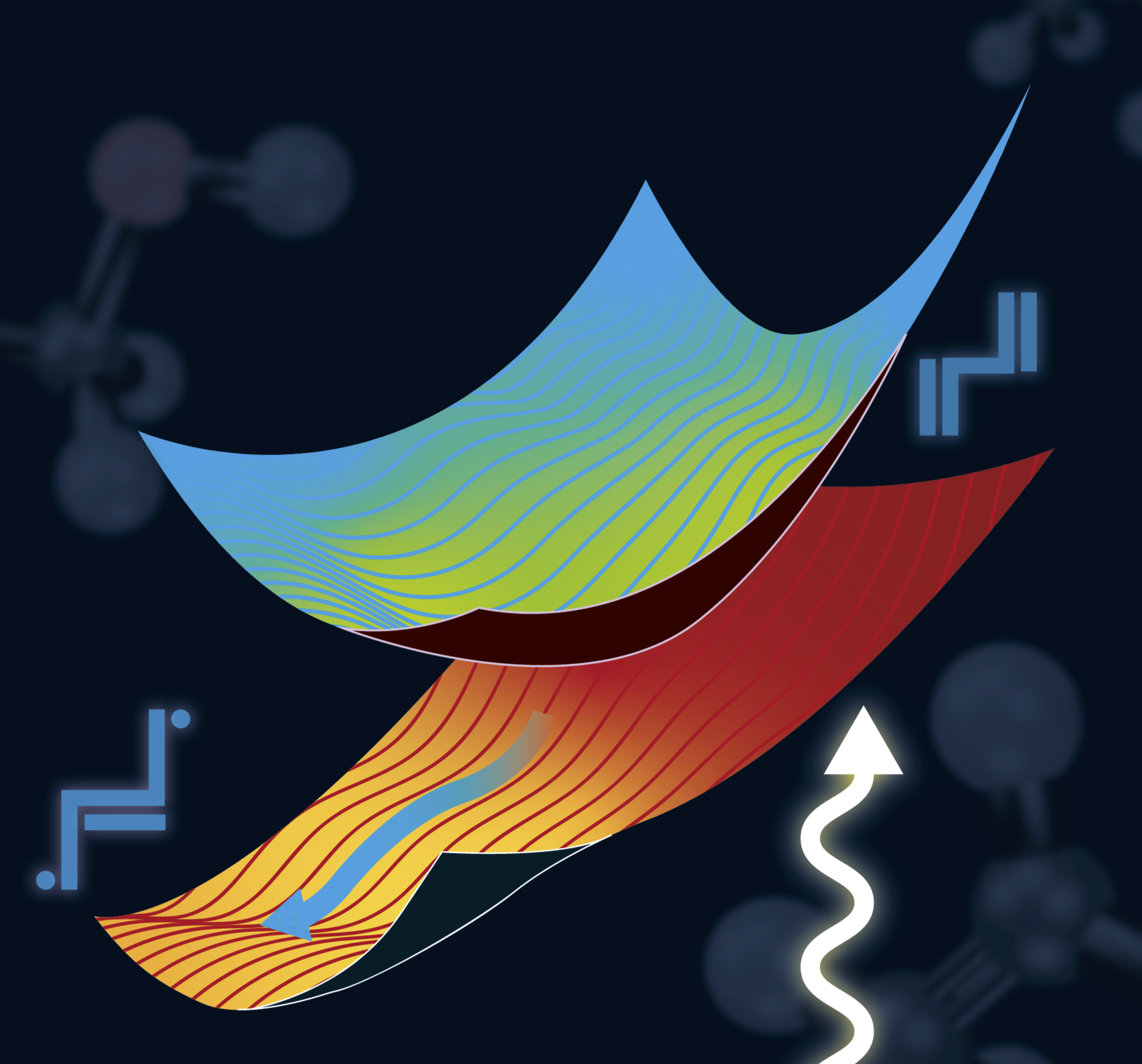
Capabilities
Selected Work
M. Oh, N. Kim, Y. Jung, C. H. Choi, and S. Lee
J. Chem. Theory Comput., 2026
S. Bonfrate, W. Park, M. Mazaherifar, N. Ferre, C. H. Choi, and M. Huix-Rotllant
ChemRxiv, 2026
M. Farmani and C. H. Choi
J. Phys. Chem. Lett. 2026, 17, 6284-6290
M. Alias-Rodriguez, F. Montorsi, W. Park, O. Weser, L. Bonfirraro, A. Nenov, M. Garavelli, and C. H. Choi
ChemRxiv, 2026